
Investing in Community Health Through Medical Student Leadership
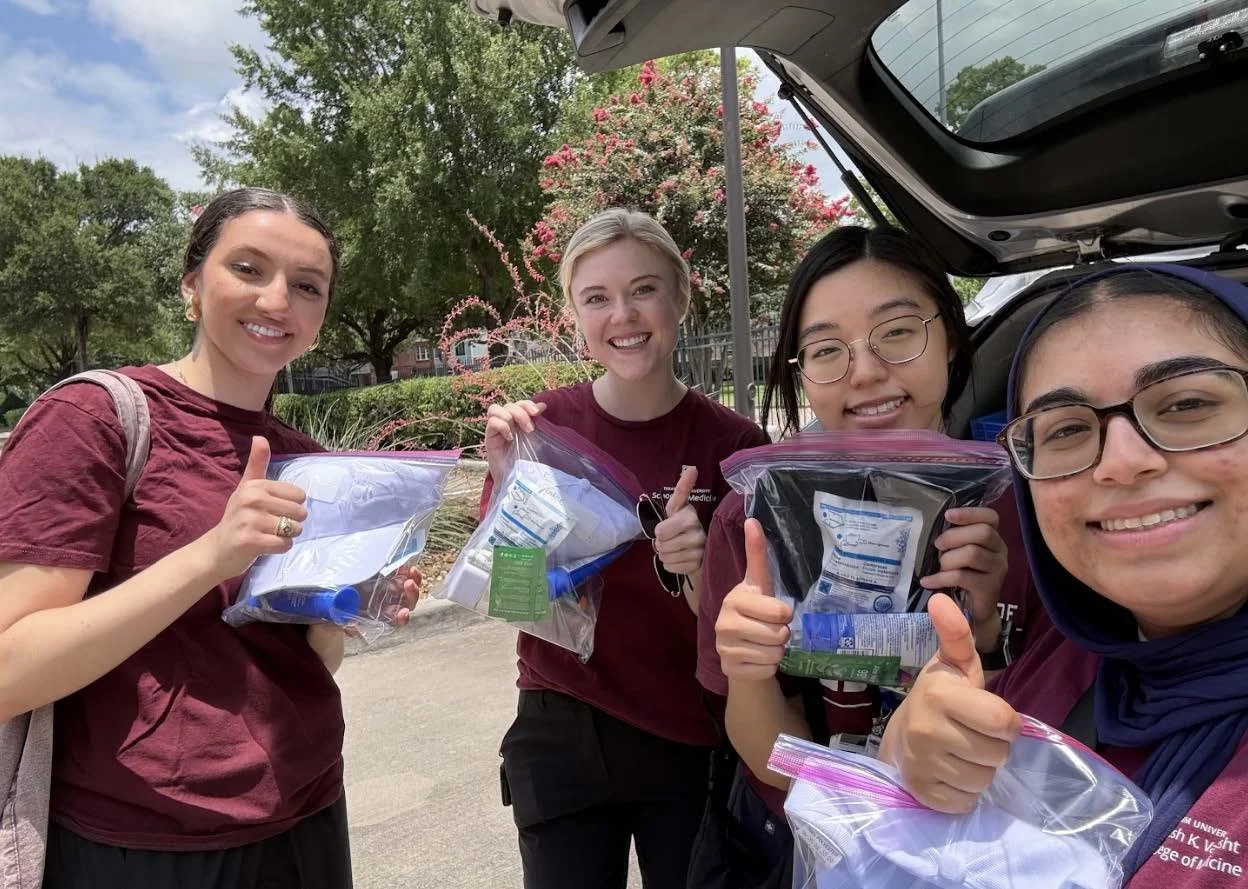
Texas A&M University students prepare resource bags for community members in need.
With support from the American Medical Association Foundation, medical students across the country have partnered with local organizations to address some of the most pressing challenges facing their communities, from food insecurity and childhood well-being to housing instability and access to critical aid.
During the 2025-26 academic year, AMA Foundation funding supported student-led community service initiatives that connected aspiring physicians with food banks, free clinics, children's organizations, street medicine teams, and other nonprofit partners. Together, these efforts resulted in thousands of donated items and essential supplies, hundreds of care packages, meals for families, and expanded access to vital community resources.
What made these initiatives particularly impactful was their local focus. Rather than implementing a single model, medical students worked directly with community organizations to identify needs and develop solutions tailored to the populations they serve.
Supporting Children and Families
Several initiatives focused on improving the wellbeing of children and families facing illness, food insecurity, or economic hardship.
At the University of Iowa Carver College of Medicine, students partnered with the Ronald McDonald House of Eastern Iowa and Western Illinois to collect snacks and meal items for families with children receiving medical treatment in Iowa City. The effort helped provide comfort and practical support to families navigating challenges away from home.
In Kansas City, Missouri, students at Kansas City University worked with the Gift of Giving Foundation to collect and donate 250 children's books, helping expand access to literacy resources for children in underserved communities.
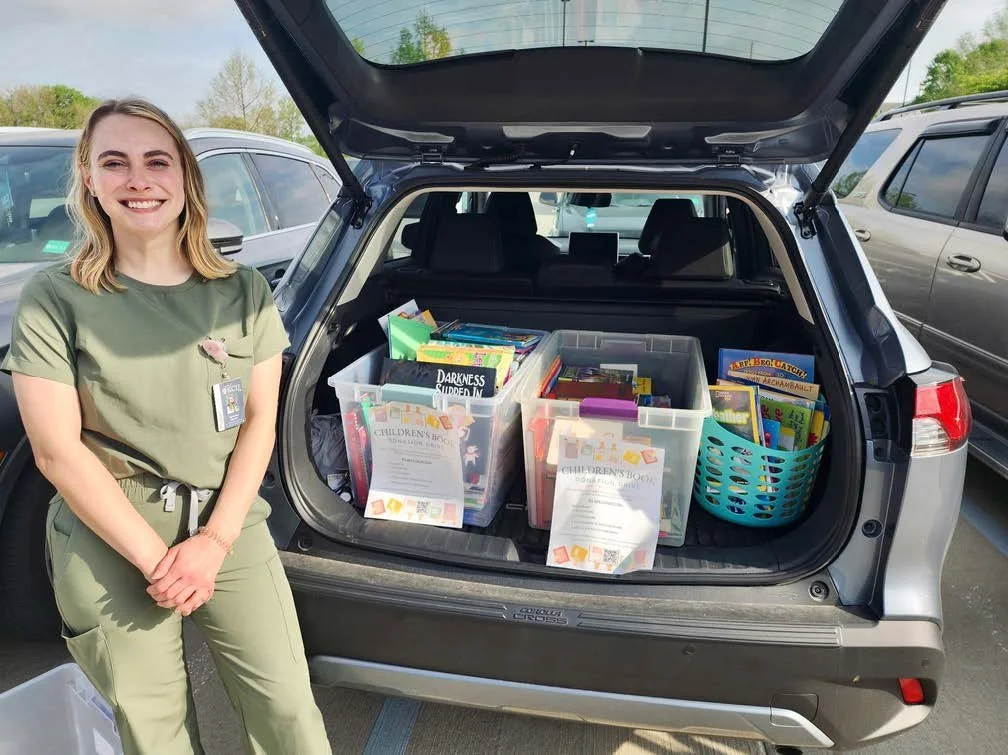
A Kansas City University student stands with a trunk full of donated children's books ready for delivery.
Meanwhile, students at Carle Illinois College of Medicine partnered with Feeding Our Kids, providing more than 1,400 oatmeal packets to support food-insecure children and families across central Illinois.
Iowa students at Des Moines University collaborated with Sleep in Heavenly Peace, contributing resources that supported the construction and delivery of beds for children without adequate sleeping arrangements. Through this effort, the organization built three beds and delivered 15 additional beds to local families.
Meeting Immediate Needs in Underserved Communities
Other student-led initiatives addressed housing instability and barriers to health care access.
At McGovern Medical School at the University of Texas Health Science Center at Houston, students partnered with HOMES Clinic Houston, which serves individuals experiencing homelessness. Through conversations with patients, students identified medication theft as a recurring obstacle to treatment adherence. Funding helped purchase secure medication-storage packs, and patients later reported that the packs helped protect their medications and personal belongings.
Students at Rutgers New Jersey Medical School partnered with StreetMed in Newark, assembling and distributing food and essential supplies. The initiative reached at least 70 unhoused community members.
Across Texas and Louisiana, students partnered with street medicine organizations, free clinics, and community outreach groups to assemble care packages containing hygiene products, hydration supplies, wound-care materials, nutrition resources, and other materials. Collectively, these efforts supported the distribution of more than 4,400 individual supplies and 867 completed care packages to medically underserved populations.
Addressing Food Insecurity at the Local Level
Food insecurity emerged as a major area of focus for many participating schools.
At Johns Hopkins University School of Medicine, students organized food collection efforts that supported community refrigerators throughout Baltimore County, helping increase access to food for families in need.
Students at the University of Virginia School of Medicine worked with community partners and the Blue Ridge Food Bank to conduct targeted food drives, ultimately contributing 129 pounds of food to local hunger-relief efforts.
At Virginia Commonwealth University School of Medicine, students partnered with Ram Pantry, which serves students, faculty, and staff across the university community. Funding helped purchase high-demand items for campus pantry locations and neighborhood mini-pantries.
In Roanoke, Virginia, students at Virginia Tech Carilion School of Medicine partnered with the Local Environmental Agriculture Project, a nonprofit that operates a mobile farmers market serving neighborhoods with limited access to fresh food. Funding provided equipment needed to support the market's operations, helping the organization continue delivering affordable, nutritious food directly to underserved communities.
Students at the University of Pittsburgh School of Medicine (UPMC) approached food insecurity through a clinical lens, partnering with the UPMC Internal Medicine Recovery Engagement Program's WoundWell Clinic. Recognizing that many wound-care patients struggled to afford nutritious meals, students provided nutritional supplements and educational materials designed to support healing and recovery.
Developing Future Physician Leaders
Beyond their impact on local communities, these initiatives provided valuable leadership experiences for medical students.
Many participating schools reported launching new community service efforts through their AMA chapters for the first time. Students recruited volunteers, coordinated logistics, managed budgets, developed partnerships, and worked directly with community organizations to carry projects from planning to implementation.
As one student leader reflected, "We have already heard from our members about how they have gained confidence, developed new skills, and grown as leaders through their work on these service projects."
An Investment in Communities and Future Physicians
The AMA Foundation's support demonstrates how targeted investments can create meaningful benefits for communities while helping medical students build skills that will serve them throughout their careers.
By empowering medical students to work alongside community organizations, the AMA Foundation is helping strengthen communities today while preparing future physicians to lead with service, compassion, and a deep understanding of the needs of the populations they serve.