The AMA Foundation
LGBTQ+
Health
Program
By convening leaders in health care, the LGBTQ+ community, medical education, community organizations, and other stakeholders, the AMA Foundation works to address persistent gaps in care affecting LGBTQ+ individuals. Our vision is to ensure all LGBTQ+ people receive evidence-based, and culturally competent care. Our national consortium’s mission is to:
Strengthen education, clinical care, research, workforce development, and health initiatives nationwide.
Create lasting infrastructure through phased implementation and sustained cross-sector collaboration.
Prepare future healthcare leaders to address evolving health care needs.
Consortium Member Institutions
-
The LGBTQIA+ Health Fellowship Program equips primary care residency graduates with the skills needed to serve as influential physician leaders in the field of LGBTQIA+ health.
-
As one of the few fellowship programs in the country focused on the care of LGBTQ+ patients, the LGBTQ+ Medicine Fellowship at the Icahn School of Medicine at Mount Sinai is a 12-month fellowship. It takes a holistic approach that encompasses medical, non-medical, and surgical training.
Mount Sinai Health System in New York City is now interviewing for 2 fellows to start July 1, 2027 for 1- year non-ACGME fellowship programs. The year will be heavily clinic based but will have a research and/or dissemination component. Both fellowships will include exposure to a broad range of LGBTQ health care in an academic medical center setting. One fellow will focus more on aspects of gender affirming care.
There will be a precepted continuity clinic. The fellows will have a broad array of experiences in LGBTQ medicine and HIV medicine along with rotations in gender affirming clinics providing care to transgender patients in endocrinology, primary care across the lifespan, gynecology, urology, plastic surgery, ENT, and voice therapy. There will be observation experiences for gender affirming surgeries including genital reconstruction surgeries, chest reconstruction surgeries, facial feminization surgeries, and voice surgeries. Fellows may also participate in the inpatient experience for patients having gender affirming surgeries and participate in a research project. The goal of the program is to train physicians to be able to oversee either general LGBTQ or more focused gender affirming health care in community practice or more academic settings.
Applications should include a full CV, evidence of participation in or completion of an ACGME approved residency program (Internal Medicine, Family Medicine, or Med/Peds), personal statement, 3 letters of recommendation including one from either the program director or an associate program director, and USMLE Board score reports. Applicants will need to have completed their ACGME approved training in Internal Medicine Med/Peds, or Family Medicine prior to commencing the fellowship.
Interviews will be scheduled for fall.
Contact Joshua Safer (joshua.safer@mssm.edu) program director, or Crystal Valentin (crystal.valentin@mountsinai.org) program coordinator, for more information.
-
The Jefferson Pride Care LGBTQIA+ Primary Care Fellowship empowers physicians to make a meaningful impact in the lives of LGBTQIA+ patients, families, and communities. This one-year, non-ACGME clinical fellowship, offers training in areas essential to the care of LGBTQIA+ individuals including:
Affirming, inclusive care for patients from LGBTQIA+ communities
Gender-affirming care
HIV management, prevention and supportive care
Sexual health and wellness
LGBTQIA+ specific aging issues
The Jefferson Pride Care LGBTQIA+ Fellowship takes advantage of the breadth and depth of Jefferson Health’s Pride Care program, an enterprise-wide initiative. Fellows rotate across a variety of sites, including two specialized in the primary care needs of LGBTQIA+ individuals as well as one specifically focusing on those ages 55+. They receive training from experts in LGBTQIA+ care, ranging from primary care providers to specialists in gender-affirming surgery, mental healthcare, and infectious disease/HIV care providers and more across the Jefferson Health network. A robust monthly didactic curriculum welcomes leaders from the pool of Jefferson Pride Care Affirming Clinicians to discuss relevant care topics, inviting interprofessional discourse and learning.
Learn more about Jefferson Pride Care and our clinical training sites.
We aim to create clinician-leaders who will advance the care of LGBTQIA+ patients locally, regionally, and nationally.
This position is 60% clinical and 40% Fellowship/training. As a non-accredited fellowship, the Jefferson Pride Care LGBTQIA+ Fellowship is supported by the inclusion of primary care attending-level sessions and fellows are hired as Faculty at Jefferson. Fellows clinical time will comprise of 6 primary care clinical sessions spread across 2 clinical sites. Research opportunities are available through collaboration with faculty across Jefferson’s Department of Family and Community Medicine, a leader in primary care in the Philadelphia region for over 50 years. Fellows are encouraged to submit their research and case reports for publication.
Candidates should have the following qualifications:
MD/DO or equivalent
Have completed a Family Medicine or Internal Medicine Residency Program
Fully licensed physicians or eligible for full licensing in both Pennsylvania and New Jersey
Have strong interest in caring for LGBTQIA+ patients and communities
Have strong primary care skills
-
Established in 2019, the UCLA LGBTQ+ Healthcare Fellowship at the David Geffen School of Medicine is the nation’s first primary care fellowship dedicated to LGBTQ+ health. The program prepares physicians to provide expert LGBTQ+ care while developing the clinical, educational, scholarly, and leadership skills needed to advance the health of sexual and gender minority populations.
This highly individualized, one-year experience prepares graduates for careers as expert clinicians, clinician-educators, scholars, and advocates in LGBTQ+ healthcare.
The curriculum spans the full spectrum of LGBTQ+ health, including gender-affirming care and hormone management, HIV prevention and treatment, hepatitis management, addiction medicine, behavioral health, and comprehensive primary care. Procedural training includes high-resolution anoscopy (HRA) for the evaluation and management of anal dysplasia, with fellows completing the case volume required for independent HRA certification. Separately, collaboration with UCLA’s fellowship programs in facial feminization and genital gender-affirming surgery provides exposure to multidisciplinary gender-affirming surgical care.
That clinical experience extends across academic, community-based, and safety-net settings, including the UCLA Gender Health Program, UCLA HIV CARE Center, Los Angeles LGBT Center, and Northeast Valley Health Corporation. Fellows work with patients from diverse cultural, linguistic, and socioeconomic backgrounds and encounter a wide range of healthcare needs, building the adaptability to practice across different clinical environments.
Throughout the year, fellows also develop as educators and advocates. With faculty mentorship, they help develop and deliver LGBTQ+ health curricula for medical students, teach resident noon conferences, mentor learners across disciplines, participate in community education, and give invited lectures. A dedicated advocacy curriculum adds practical experience in legislative advocacy, persuasive communication, dialogue across differences, and community engagement, with individualized mentorship to support each fellow’s advocacy interests.
In addition, each fellow completes a longitudinal scholarly or quality improvement capstone project with a faculty mentor. Projects may advance clinical practice, address gaps in LGBTQ+ health research, improve healthcare delivery, or examine questions affecting underserved populations. Fellows develop skills in study design, quality improvement, critical appraisal, and dissemination while learning to use research to improve care. The year culminates in a departmental grand rounds presentation.
By bringing together advanced patient care, teaching, scholarship, advocacy, and community engagement, the program prepares physicians to lead in LGBTQ+ health. Graduates have gone on to leadership roles in academic medicine, clinical program development, and community health.
Fellows receive a competitive salary above the standard PGY-4 level, fully employer-sponsored health insurance, and dedicated funding for continuing education and AAHIVS credentialing. The program welcomes physicians who have completed residency training in Family Medicine, Internal Medicine, or Medicine-Pediatrics.
For additional details and application information, please visit the UCLA LGBTQ+ Healthcare Fellowship website.
For questions, please contact Dr. George C. Yen, MD, Associate Clinical Professor in the Department of Medicine and Director of the UCLA LGBTQ+ Fellowship Program, at gcyen@mednet.ucla.edu.
-
Sawyer Pardo Fellowship for LGBTQ+ Health
University of Cincinnati College of Medicine
https://www.lgbtqfellowship.com/
The Sawyer Pardo Fellowship prepares physicians for subspecialty primary care practice with LGBTQ+ patients and communities. Fellows develop advanced clinical expertise, produce scholarship, and build the leadership skills to shape care at the systems level. With 50% protected academic time and dedicated faculty mentors, each fellow is supported in a learning plan developed for their future career.
Fellows practice alongside UC Health's LGBTQ+ Occupational Therapy Fellowship, the first program of its kind in the nation, providing coordinated team-based care.
Clinical Care: Fellows practice independent, evidence-based primary care including adult hormone management, preventive care, HIV primary care, and procedural training in anoscopy, colposcopy, and LARC.
Research: Fellows design community-based research and quality improvement projects. Graduate certificate pathways in Community-Engaged Research and Clinical and Translational Research are available within the curriculum.
Education: Fellows teach medical students, residents, and interdisciplinary learners and develop curriculum. A Graduate Certificate in Medical Education is an available pathway.
Health Systems Leadership: Fellows build the policy knowledge and systems-level skills to design and sustain evidence-based, patient-centered care within evolving healthcare environments.
Mentorship: Each fellow works with dedicated faculty mentors to develop an individualized learning plan supporting clinical growth, scholarly productivity, and long-term career goals.
-
The University of Wisconsin LGBTQ+ Health Primary Care Fellowship accepted its first fellows into its program in 2022. Taking 1-2 fellows a year, UW’s program is focused on primary clinical care to support LGBTQ+ populations, with particular strengths in essential transgender care (for adults and pediatric patients), HIV care and prevention, and high-resolution anoscopy training.
The fellowship curriculum offers a broad range of clinical learning through longitudinal experiences in primary care and specialty clinics, customizable rotations based on individual goals, and engagement with community. Given Madison’s vibrant LGBTQ+ community, strong legacy of LGBTQ+ advocacy, and position as the capital of Wisconsin, there are many advocacy opportunities both informal and via official legislative avenues.
All of our graduates have gone on to work in LGBTQ+ health care and have identified hands-on HRA training, HIV certification process, and pediatric/adolescent clinic as central elements that have supported their success. Madison is a beautiful city with excellent biking and trail infrastructure, access to the four lakes and numerous water sports, and a strong arts community, facilitated by the large undergraduate campus.
Our program is led by Ronni Hayon (Family Medicine) and Britt Allen (General Pediatrics), both with more than a decade of experience in LGBTQ+ healthcare and with strong commitments to primary care. While the fellowship is open to all primary care specialties, the administrative infrastructure is within the Department of Family Medicine, with dedicated administrative support and a community of fellows for academic and social connection.
Please visit our website for additional details or to apply at: https://www.fammed.wisc.edu/fellowships/lgbtq/
-
The objective of Vanderbilt University Medical Center (VUMC)’s LGBTQ+ Healthcare Fellowship is to train future primary care providers to deliver sensitive, comfortable, clinically knowledgeable, and culturally competent care to LGBTQ+ adults. Clinical excellence is the primary training objective.
We further seek to train the next generation of leaders in adult LGBTQ+ health, and fellows will have an individualized career development training plan focused in the academic area of their interest. These could include, but are not limited to academic medicine, community advocacy, health systems science and systems of care, health policy, quality improvement or community practice.
The fellow will have yearlong longitudinal clinical rotations in a variety of VUMC and affiliated clinical sites. The fellow will inherit a panel of primary care and consultation patients, including at the Vanderbilt Comprehensive Care Clinic (caring for people living with HIV). There will be additional training opportunities tailored to the trainee’s career trajectory and goals. The fellow will learn with dedicated core faculty across disciplines from Endocrinology, Infectious Disease, Gynecology, Plastic Surgery, and General Internal Medicine.
We seek applicants that are graduates of an Internal Medicine or Family medicine residency, or those interested in an APP (Advanced Practice Provider) fellowship at VUMC. The fellow will join the consortium of similar fellowships across the country, learning alongside other fellows and forming a community of practice with other future leaders in LGBTQ+ Health. Research and/or project support will allow for scholarly work and the fellow will integrate directly into VIVID Health, VUMC’s clinical service lines for sexual and gender minority patients.
Join Us at the Annual Convening
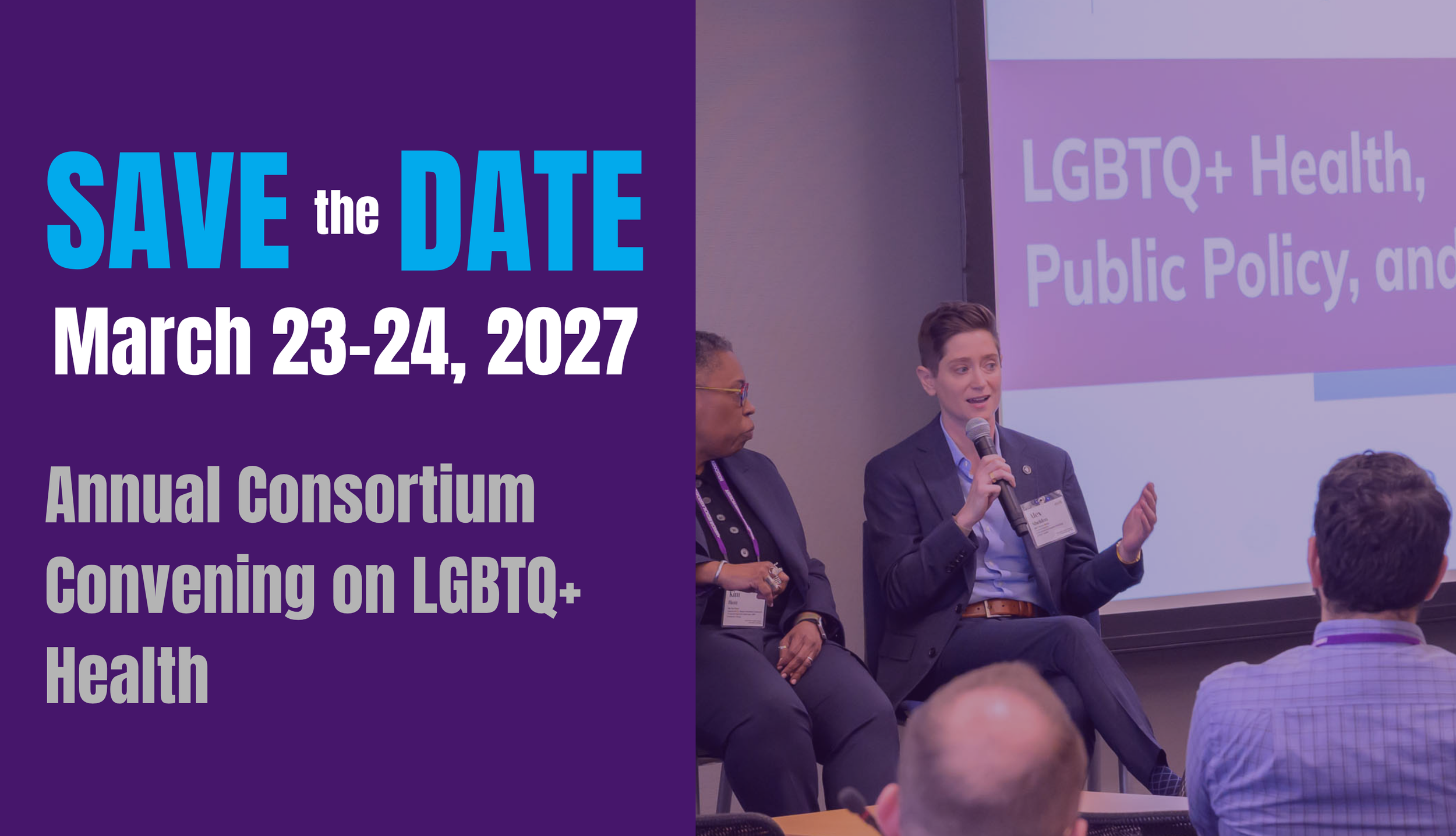
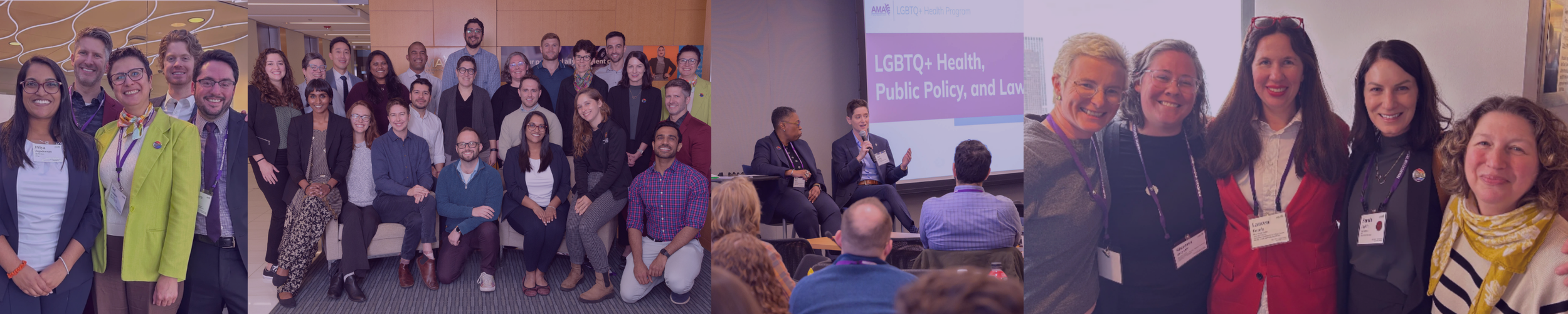
Our annual convening brings together leading institutions to tackle LGBTQ+ health disparities directly. The two-day event engages hundreds of America’s most influential medical professionals in co-creating vital tools and fostering collaboration among leading health programs to transform health care for LGBTQ+ individuals. The convening represents a unique opportunity to engage in deep discussions, exchange knowledge, and collaborate to shape the future of LGBTQ+ health care. Click here to learn more.
“Now more than ever, we need to equip the next generation of physician leaders in LGBTQIA+ health with the skills to provide comprehensive and affirming care for all LGBTQIA+ populations, across the lifecycle, with a focus on serving marginalized LGBTQIA+ communities.”
- Jennifer Potter, MD, professor of medicine at Beth Israel Deaconess Medical Center and Harvard Medical School; director of the LGBTQIA+ Population Health Program and co-chair at The Fenway Institute