
Why Trust in Medicine Became Personal for One AMA Foundation Donor
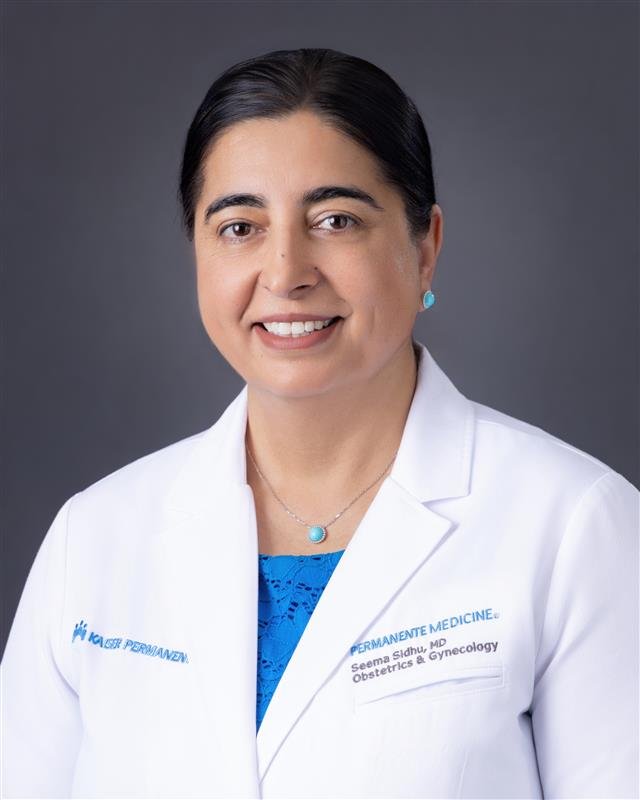
Seema Sidhu, MD
As part of the AMA Foundation’s “Your Story, Your Impact” series, donor Seema Sidhu shares the personal loss that shaped her journey into medicine and her commitment to giving back.
Seema Sidhu’s journey into medicine began with a loss she has never forgotten.
As a young woman, she watched her aunt die from a postpartum hemorrhage following a home birth. By the time help was considered, it was too late. Her uncle did not trust hospitals. He did not trust the medical system. That distrust—common in many underserved and immigrant communities—cost her aunt her life.
“In that grief, a purpose was born.”
“In that grief, a purpose was born,” Sidhu says. “I knew I wanted to be part of changing outcomes for women, not just inside the clinic, but in the conversations that happen long before a woman ever decides to seek care.” That calling has guided her ever since.
At 19, Sidhu immigrated to the United States, leaving behind everything familiar to begin a new life in a new country. That same year, she married. At 20, she gave birth to her first child. The challenges were immediate and immense: learning a new system, navigating cultural expectations, and raising a family. With her daughter and husband by her side, Sidhu completed medical school. Today, as an OB/GYN and a member on the AMA House of Delegates Council on Medical Education, she is driven by the same belief that sustained her through those early years: women deserve better care, better information, and better advocates.
That belief is also what led her to the AMA Foundation.
“I did not get where I am alone,” she says. “There were mentors, supporters, sometimes even strangers, who believed in me when circumstances gave them every reason not to.”
Giving back, for Sidhu, is deeply personal. But so is her understanding of what happens when medicine fails to earn the trust of the communities it serves. She sees it every day in her patients: women who delay care, who avoid hospitals, who inherit fear of a system that should protect them. “The AMA Foundation offered me a way to help change that,” she explains. “To support the next generation of physicians who will look like those patients, speak their languages, and earn the trust that has historically been broken.”
Among the AMA Foundation’s programs, Physicians of Tomorrow scholarships hold a special place in her heart. Sidhu understands firsthand how financial strain can jeopardize even the strongest calling to medicine. During her training, she balanced motherhood, education, household responsibilities, and economic pressure within a system not always designed for someone like her.
“Scholarships don’t just ease stress. They can be the reason a future physician doesn’t walk away.”
“Scholarships don’t just ease stress,” she says. “They can be the reason a future physician doesn’t walk away.”
That belief is at the heart of how she views collective impact. For Sidhu, giving alongside other physicians is both an acknowledgment of how far she has come and a commitment to how medicine must move forward.
“None of us got here alone,” she says. “And none of us should act like we did.”
Over time, her relationship with the AMA Foundation has evolved from appreciation into true partnership. Her philanthropy is no longer separate from her professional life. When Sidhu looks ahead, what gives her hope is the possibility of a health care system where trust replaces fear and where patients see themselves reflected in the physicians who care for them.
“I see what happens when a patient meets a doctor who understands her background, speaks her language, and has walked a path she recognizes,” she says. “The walls come down. Trust is built.” Her support of the AMA Foundation reflects a belief that transforming medicine starts with investing in physicians who reflect and understand the communities they serve.